El barberillo de Lavapiés

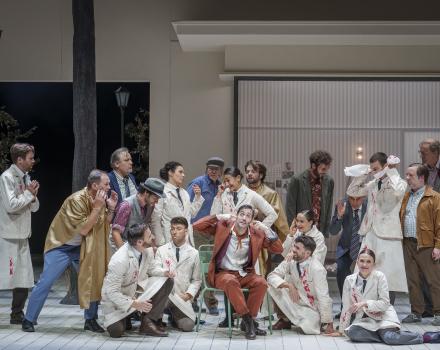
Madrid in turmoil. In the lively working-class neighborhood of Lavapiés during the 18th century reign of Charles III, meet Lamparilla, a quick-witted barber, factotum, dentist and street singer. Lamparilla has no interest in politics but he is in love and becomes embroiled in an intrigue that reaches all the way to the Spanish royal family. Will his charm, network and cunning disguises help him outsmart the scheming aristocrats and political conspirators?
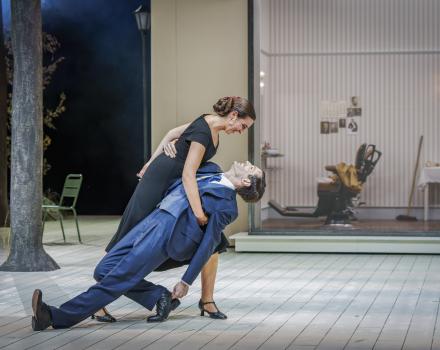
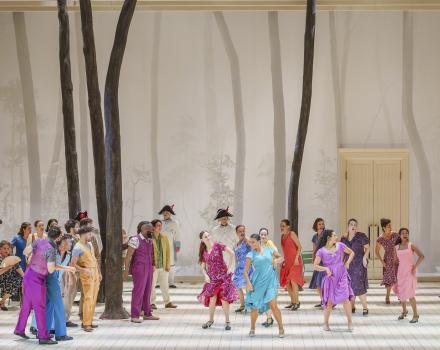
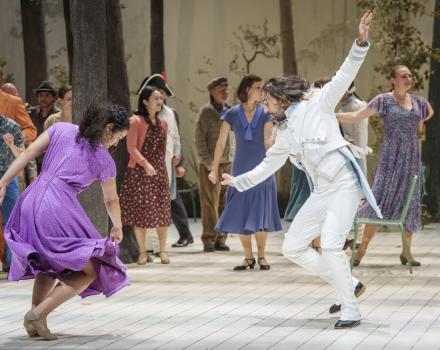
El barberillo de Lavapiés from 1874 is a zarzuela masterpiece by Francisco Barbieri. This cheerful game of cat and mouse with the authorities is fueled by irresistible Spanish dance rhythms and music reminiscent of Rossini and Verdi. In this classic 19th-century zarzuela, still relatively unknown outside Spain, social and political tensions are vented through folklore and humour. For his acclaimed new production for Theater Basel, Christof Loy devotes himself to the best-known work of this genre and brings it to the stage with a Spanish cast and in the original language. The zarzuela celebrates the cleverness of common people who triumph over powerful elites through wit rather than force, with lashings of charm, irresistible dance numbers and gentle social commentary.
CAST
|
Lamparilla
|
David Oller
|
|---|---|
|
Paloma
|
Carmen Artaza
|
|
Estrella
|
Cristina Toledo
|
|
Don Luis de Haro
|
Santiago Sánchez
|
|
Don Juan de Peralta
|
Alejandro Baliñas Vieites
|
|
Don Pedro de Monforte
|
Joselu López
|
|
Lope / Guitarist
|
Marcelino Echeverría
|
|
Vendedora
|
Marta Bauza
|
|
Two students
|
Gabriel Courvoisier
Teddy Métriau
|
|
Dancers
|
Iván Amaya
Giuseppe Bencivenga
Laura Garcìa Aguilera
Pascu Ortí
Davide Pillera
Giulia Tornarolli
Amparo Uhlmann
Chiara Viscido
|
|
Orchestra
|
Basel Symphony Orchestra
|
|
Chorus
|
Theater Basel Chorus
|
|
Extras
|
Theater Basel Extras
|
|
Music
|
Francisco Asenjo Barbieri
|
|---|---|
|
Text
|
Luis Mariano de Larra
|
|
Director
|
Christof Loy
|
|
Conductor
|
José Miguel Pérez-Sierra
|
|
Sets
|
Manuel La Casta
|
|
Costumes
|
Robby Duiveman
|
|
Choreography
|
Javier Pérez
|
|
Lights
|
Valerio Tiberi
|
|
Chorus master
|
Michael Clark
|
|
Dramaturgy
|
Elise Boch
|
VIDEOS


STORY
Act I
El Pardo Palace Grounds. It is the day of St Eugene’s Procession and half of the town has turned out to have fun and eat outside. In the midst of the hullabaloo, the popular figure of Lamparilla and a seamstress called Paloma meet up with their friends. At the same time, and in the same place, a group of conspiring nobles have agreed to meet: they want to overthrow Grimaldi so as to bring Floridablanca to power, and thus bring the country a new government. Don Juan de Peralta and the Marchioness del Bierzo, Estrella, put in an appearance, but Don Luis de Haro also approaches, to find his fiancée with another man; the situation is more complicated because Don Luis is Grimaldi’s nephew, so the plotters are trying to ensure he does not find out what they are doing there. At that moment, and by pure chance, the two stories become interwoven: thus the barber and the seamstress get caught up in the plotting and help the little Marchioness and the nobles to escape from Don Pedro de Monforte’s ambush, without really knowing what is going on.
Act II
A square in the Lavapiés quarter. Five days have gone by with no news of Lamparilla, but he finally appears and relates to everyone what has happened, although he does not fully understand what it is all about. Now Paloma and Estrella, the little Marchioness, appear; they were the ones to arrange the barber’s release from the Villa Prison. And at this moment Paloma finally understands the noble lady’s real intentions: to conspire against Grimaldi to make King Carlos III understand the real worth of Floridablanca, and make it possible for the country to have a fairer government. Estrella and Don Luis meet again, but their relationship becomes more strained because of the events of the previous days. However, the meeting between Lamparilla and Paloma goes rather better: they discover that it is they who may be able to save the country! But when they see the Walloon Guards nearby, they suspect that this is a new ambush being set up by Don Pedro to trap the conspirators in the Marchioness’s house, so the two of them organise a popular uprising to save the nobles with the help of all the locals.
Act III
House in Toledo Street. The seamstresses gather in the attic room of Paloma’s house. Estrella, the little Marchioness, is there too, since this is where she has been hidden since she fled her own house a month before. She now dresses as a maja, a local Madrid beauty, and is hoping that Lamparilla, with his friends and neighbours, can organise her escape from the city to go abroad. Don Luis joins the barber’s plan dressed as a majo, a Madrid swell, because he wants to flee with his lover, the little Marchioness. However, this time Don Pedro is one step ahead with his guards, and takes them all prisoner. At that very moment the news comes in that Madrid is in turmoil because Grimaldi has been deposed and Floridablanca is the new Secretary of State. This incident leads Don Luis to decide to go into exile, and to his surprise the little Marchioness says that she will go with him; she, having seen her wishes for political reform come true, is satisfied, although Lamparilla warns her that the Country’s happiness will not rest just on this change, since “they are the same dogs with different collars on” – a leopard cannot change its spots. And Paloma in turn warns her little barber: now he must devote himself solely to shaving his customers…
GALLERY