Tannhäuser

Knight and singer, Tannhäuser is torn between sensual pleasure and spiritual redemption after living with the goddess Venus. Seeking redemption in the human world, he falls in love with Elisabeth but struggles to gain her trust while wrestling with his own guilt, desire and faith. Is redemption still possible for the man in search of forgiveness?
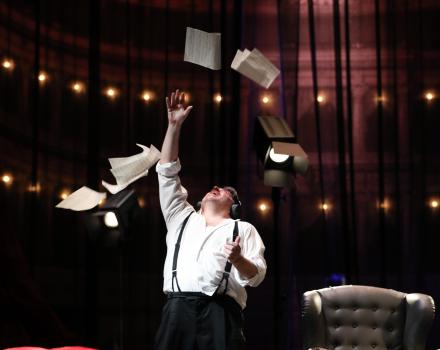
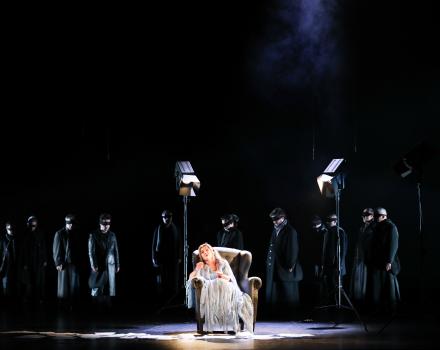
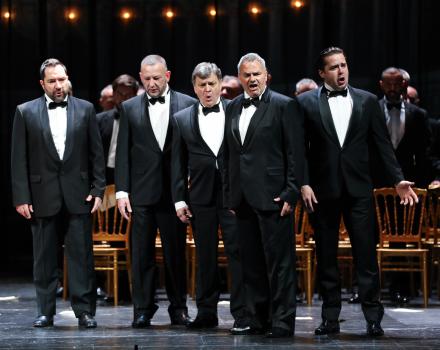
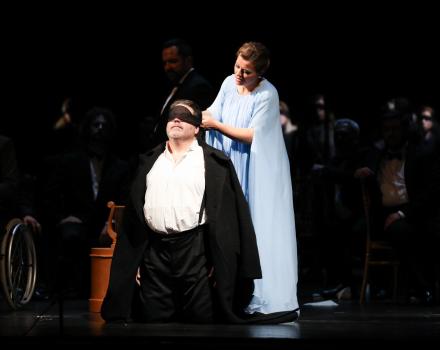
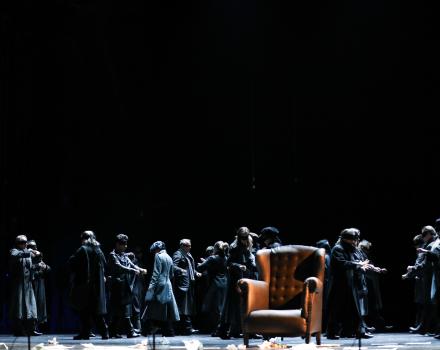
Richard Wagner’s opera Tannhäuser from 1845 marks a transitional moment in his oeuvre, poised between early Romantic influences and the musical dramas of his mature period. Drawing on legends of medieval minstrels, Wagner penned the libretto himself. Philosophically and symbolically, the opera is driven by dualities, musically conveyed through the contrast between the sensual and the spiritual. Religious scenes such as the pilgrims’ chorus and Elisabeth’s prayer form a powerful counterpoint to Venus’s seductive music. Croatian National Theatre in Zagreb’s new production is directed by Frank Van Laecke, a Belgian director with a distinguished international career known for his ability to honour classical forms, giving new energy to traditional operatic aesthetics.
CAST
|
Tannhäuser
|
Eric Laporte
|
|---|---|
|
Elisabeth
|
Evelin Novak
|
|
Wolfram von Eschenbach
|
Ljubomir Puškarić
|
|
Hermann
|
Sorin Coliban
|
|
Venus
|
Sofija Petrović
|
|
Walther von der Vogelweide
|
Filip Filipović
|
|
Heinrich der Schreiber
|
Ivo Gamulin
|
|
Biterolf
|
Ozren Bilušić
|
|
Reinmar von Zweter
|
Siniša Štork
|
|
The young shepherd
|
Petra Cik
|
|
First page
|
Mima Karaula
|
|
Second page
|
Rea Alaburić
|
|
Third page
|
Vedrana Zrnić
|
|
Fourth page
|
Tena Lebarić Rašković
|
|
Music
|
Richard Wagner
|
|---|---|
|
Text
|
Richard Wagner
|
|
Conductor
|
Srba Dinić
|
|
Director
|
Frank Van Laecke
|
|
Sets and costumes
|
Philippe Miesch
|
|
Choreography
|
Daan Wijnands
|
|
Lights
|
Marc Heinz
Frank Van Laecke
|
|
Assistant Conductor
|
Barbara Kajin
|
|
Assistant Director
|
Marta Tutiš
|
|
Assistant costumes
|
Ana Trišler
|
|
Chorus master
|
Luka Vukšić
|
Videos


STORY
Act I
Wartburg castle and its environs, medieval Germany. The minnesinger Tannhäuser, having spent a year in the enchanted realm of Venus, goddess of love, longs to return to the human world. Surrounded by sensual delights, he feels an ever-growing yearning for nature, for the changing seasons, and for freedom beyond a life of unending pleasure.
At Venus’s command, he sings in praise of love, yet his song repeatedly turns into a plea for release. Angered by his refusal to remain, Venus lets him go. Calling upon the Virgin Mary, Tannhäuser is suddenly transported to a valley near the Wartburg.
A procession of pilgrims passes on its way to Rome, and Tannhäuser, deeply moved, falls to his knees in prayer. The sound of hunting horns announces the arrival of Landgrave Hermann and his knights, who recognise their long-lost companion and urge him to return. He hesitates, until Wolfram reminds him of Elisabeth, the Landgrave’s niece, whose affection he once won. At the sound of her name, Tannhäuser resolves to follow them back to the Wartburg.
Act II
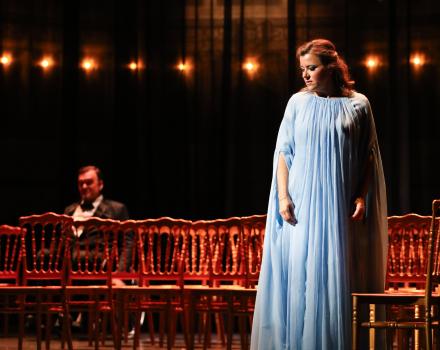
The Hall of Song at the Wartburg. Elisabeth, returning after a long absence, greets the hall with joy. Led in by Wolfram, Tannhäuser appears before her. Their reunion reveals the depth of their mutual feeling, while Wolfram recognises that his own love for Elisabeth is without hope.
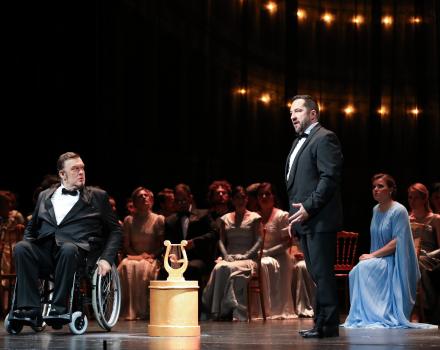
The Landgrave welcomes the assembled guests to a song contest and declares love as its theme, promising the victor any wish to be granted at Elisabeth’s hand. Wolfram begins with a song praising pure, idealised love. Tannhäuser, still haunted by his time with Venus, responds with an ardent celebration of sensual, earthly passion.
The other singers oppose him, defending a more restrained vision of love, but Tannhäuser’s fervour grows ever more intense until he erupts in a hymn to Venus herself. His revelation horrifies the court. The knights draw their swords, yet Elisabeth intervenes, placing herself between them and pleading for mercy.
The Landgrave halts the conflict and decrees that Tannhäuser may be forgiven only if he joins the pilgrims on their journey to Rome and seeks absolution. Stricken with remorse, Tannhäuser throws himself at Elisabeth’s feet before departing.
Act III
Several months later, in the valley near the Wartburg, Wolfram finds Elisabeth praying at a shrine, awaiting Tannhäuser’s return. Pilgrims arrive from Rome, rejoicing in their forgiveness, but he is not among them. Overcome with grief, Elisabeth entrusts her soul to the Virgin Mary, hoping to intercede for Tannhäuser in heaven, and slowly departs. Left alone, Wolfram invokes the evening star to watch over her.
Night falls. Tannhäuser returns, exhausted and broken. He recounts his pilgrimage: despite his penance, the Pope denied him absolution, declaring that his sins could no more be forgiven than the papal staff could bear leaves again. In despair, Tannhäuser resolves to return to Venus and calls upon her. She appears, ready to reclaim him, until Wolfram invokes Elisabeth’s name.
At that moment, a funeral procession descends the valley: Elisabeth has died. Confronted with her sacrifice, Tannhäuser regains clarity. Venus vanishes. He collapses beside Elisabeth’s body, imploring her to pray for his soul, and dies.
At dawn, pilgrims arrive bearing news of a miracle: the Pope’s staff has blossomed, a sign that Tannhäuser’s redemption has been granted.
Gallery