I Lituani

In the Middle Ages, the Teutonic knights have overran Lithuania. A noble, Walter leaves his wife Aldona to wreak vengeance on the Teutons for the invasion of his homeland. In disguise as Corrado he becomes chief of the Teutonic knights and uses his authority to spare Lithuanian prisoners. Aldona arrives, seeking news of her husband and 'Corrado's' cover is blown. Will Walter’s quest for vengeance ultimately destroy his chance at love and redemption?
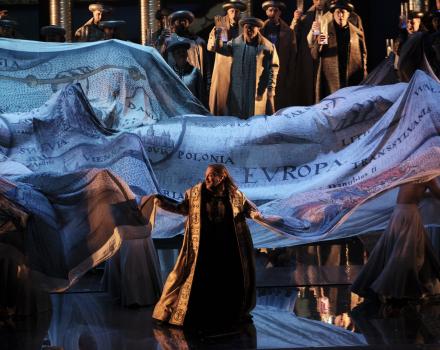
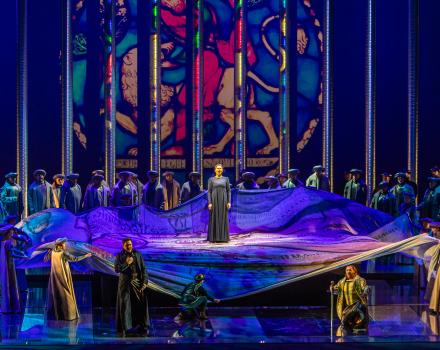
Ponchielli wrote his opera I lituani (The Lithuanians) in the early 1870s based on Adam Mickevičius' narrative poem Konrad Wallenrod. As a story of national liberation, this literary source was full of resonance for those seeking freedom from oppression anywhere in the 19th century - especially to an Italian composer just a decade after the official reunification of his own country. After the premiere at La Scala in 1874, it falls in the 21st century to the Lithuanian National Opera to stage this opera; indeed no other nation can claim an opera title to itself! Ponchielli's score is filled with grandiose scenes, characteristic choruses and dances, and vocal lines of which foreshadow La gioconda. Argentine director Hugo De Ana directs this recent production from Vilnius to his own set and costume designs with Ričardas Šumila conducting Ponchielli’s lavish score.
Cast
|
Aldona
|
Viktorija Miškūnaitė
|
|---|---|
|
Albano
|
Tadas Girininkas
|
|
Arnoldo
|
Eugenijus Chrebtovas
|
|
Walter / Corrado
|
Gaston Rivero
|
|
Vitoldo
|
Alfredas Miniotas
|
|
Dancers
|
Lithuanian National Ballet
|
|
Orchestra
|
Orchestra of Lithuanian National Opera and Ballet Theatre
|
|
Chorus
|
Chorus of Lithuanian National Opera and Ballet Theatre
|
|
Music
|
Amilcare Ponchielli
|
|---|---|
|
Text
|
Antonio Ghislanzoni
|
|
Director
|
Hugo De Ana
|
|
Conductor
|
Ričardas Šumila
|
|
Sets and costumes
|
Hugo De Ana
|
|
Lights
|
Valerio Alfieri
|
|
Choreographer
|
Michele Cosentino
|
|
Video
|
Sergio Metalli
|
|
Chorus master
|
Česlovas Radžiūnas
|
Story
Prologue
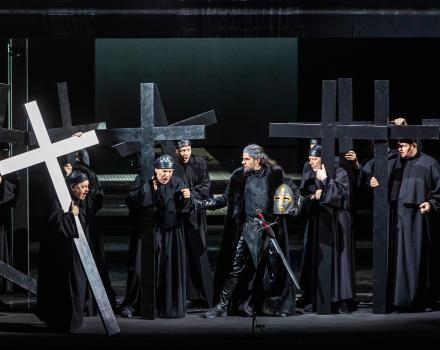
14th century, Lithuania. From the battlements of a castle, Albano, an old bard, laments that his country is being destroyed by the Teutons. Aldona, a Lithuanian princess, wonders about her brother, Arnoldo, and Walter, her husband, and invites everyone to pray. Arnoldo and Walter return and announce a heinous betrayal by Vitoldo, one of their leaders, which has led to the defeat of the Lithuanian army. Walter tells his wife about using his German education to defeat the Teutonic Knights, and swears his eternal love for her before leaving to avenge the Lithuanians.
Act I
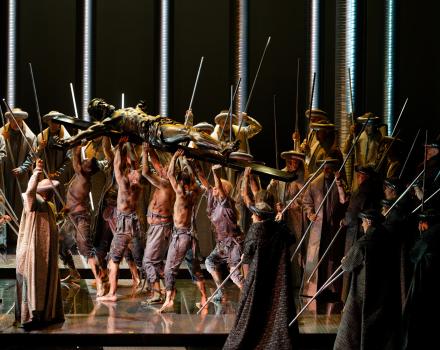
Ten years later, in the cathedral square of Marienburg, the Teutonic Knights celebrate the new Grand Master of the Teutonic Order, Corrado Wallenrod, who is actually Walter. Vitoldo is furious, because he believes he should be Grand Master. Ten Lithuanian prisoners in chains are brought to be sacrificed in Corrado's honor at the celebration; Arnoldo is one of them. Corrado unexpectedly frees them, and afterwards Arnoldo realizes that Corrado is actually Walter. Arnoldo runs into his sister, Aldona, who has come to Marienburg after entering a convent, hoping to find Walter. Albano, Arnoldo, and Aldona set out to find Walter in the castle.
Act II
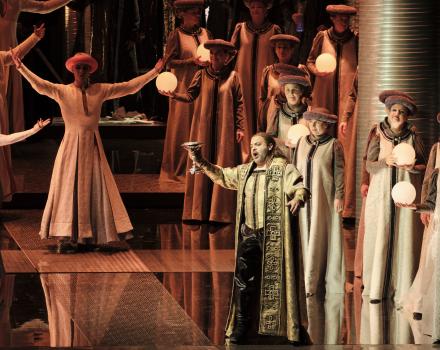
In a large hall of the castle where the celebration is being held, Corrado invites everyone to dance and to sing. Arnoldo and Aldona, disguised as bards, sing a song about the sad fate of Lithuania, which also predicts its imminent liberation. The Teutonic Knights object, and Corrado hurls himself towards Arnoldo, while Aldona tries to separate them. Corrado orders the knights to sheath their swords, and Albano tries to convince Corrado not to give his true identity away. Vitoldo recognizes Aldona, but Corrado orders the judgement against Aldona and Arnoldo be adjourned so that the celebration can continue.
Act III
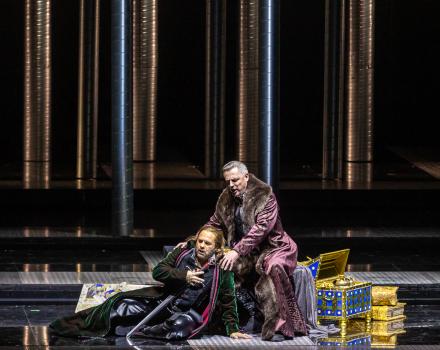
Aldona comes out of the ruins of a cloister, nearby to where a battle between the Lithuanians and Teutonic Knights is taking place. She meets Walter, and hopes for a happy future of love, but Walter has been betrayed for causing the defeat of the Teutonic Knights at the hands of the Lithuanians. Later, back in the castle, Albano tells Walter that a secret court has sentenced Walter to death. Rather than falling into enemy hands, Walter drinks some poison and exalts the victory of the Lithuanians, and asks Albano to give Aldona his last farewell. Aldona arrives, and Walter dies in her arms. The Willi, divine spirits of Lithuania, arrive to welcome the glorious warrior's soul.
Videos


Gallery