Orfeo ed Euridice

Orfeo is so consumed with grief at the death of his beloved Euridice that the gods allow him to lead her back from the underworld - if he will not look at her on the way. But who can resist looking at a loved one?
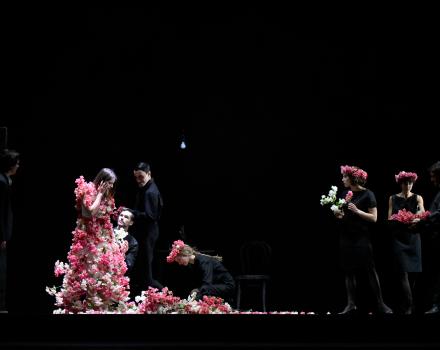
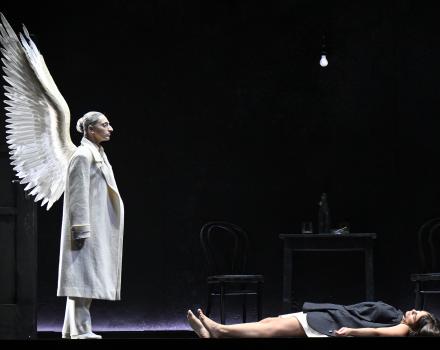
Premiered in 1762, Orfeo ed Euridice is a turning point in the history of opera. Freeing the plot from the conventions of the 18th century opera seria, Gluck introduces fluidity to the drama. The rigid alternation of aria and recitativo is abandoned; continuity and unity are the cornerstones of Gluck's reform. The movement of Gluck’s music - with its lyrical intensity and the interweaving of chorus, solo singing and dance - appeals to theatre makers from all horizons. Teatro Regio Parma has entrusted their new production to the Iranian artist Shirin Neshat, known primarily for her work in film, video and photography particularly in black and white. Since staging her first opera Aida in Salzburg in 2017, Neshat continues to experiment across art forms, imbuing her work with highly poetic and politically charged images and narratives that question issues of power, religion, race, gender and the relationship between past and present, East and West, individual and collective, through her personal experience as an Iranian woman living in exile.
CAST
|
Orfeo
|
Carlo Vistoli
|
|---|---|
|
Euridice
|
Francesca Pia Vitale
|
|
Amore
|
Theodora Raftis
|
|
Orchestra
|
Filarmonica Arturo Toscanini
|
|
Chorus
|
Coro del Teatro Regio di Parma
|
|
Music
|
Christoph Willibald Gluck
|
|---|---|
|
Text
|
Ranieri de' Calzabigi
|
|
Director
|
Shirin Neshat
|
|
Conductor
|
Fabio Biondi
|
|
Sets
|
Heike Vollmer
|
|
Costumes
|
Katharina Schlipf
|
|
Lights
|
Valerio Tiberi
|
|
Choreography
|
Claudia Greco
|
|
Dramaturgy
|
Yvonne Gebauer
|
|
Photography
|
Rodin Hamidi
|
|
Chorus master
|
Martino Faggiani
|
VIDEOS


STORY
Act I
Nymphs and shepherds gather around the tomb to lament in solemn mourning the death of Euridice, who was bitten by a snake. Her husband, Orfeo, laments her loss and can only utter her name (‘Ah, se intorno’). Left alone, he reproaches the gods and sings of his grief (‘Chiamo il mio ben’). Amore (Cupid) appears to announce that Jove, moved to pity by Orfeo’s despair, will allow him to descend to the underworld to bring Euridice back from the land of the dead. However, there is a condition – that Orfeo is forbidden to look at his wife until they emerge from the caverns of the River Styx otherwise he will lose her forever. Although Orfeo’s blood freezes at the prospect of losing her again, he accepts the condition and, in a clap of thunder, leaves for Hades.
Act II
At a dreadful cave, furies and spectres appear, trying to deny Orfeo access to the underworld. He begins to play his lyre and his lament eventually placates them and they allow him uninterrupted passage into the Elysian Fields, a beautiful landscape with groves and meadows, rivers and streams. Orfeo is entranced (‘Che puro ciel!’) but realises he cannot be happy here unless he is reunited with Euridice. Led by a chorus of heroines, Euridice approaches Orfeo who, without looking at her, leads her away.
Act III
In a dark cavern on the banks of the Lethe, Orfeo bids Euridice to follow his footsteps. Euridice wonders if she is in a dream and asks Orfeo to explain. He tries to hurry her along, but she is confused and wonders if Orfeo’s love for her has faded like a wilting rose. Orfeo tries to resist turning to look at her, especially when she rails against his coldness, professing she would rather die again than live with him. She expresses her torment (‘Che fiero momento!’) and asks why he offers her no comfort. Eventually, Orfeo can take it no more and turns around impulsively to look at her. Euridice dies again. Orfeo, driven to despair, wonders how he can go on living without her (‘Che farò senza Euridice?’) and he resolves to kill himself. Amore suddenly appears and disarms him. Moved by his grief, Amore revives Euridice and reunites the couple. At a magnificent temple, Orfeo and Euridice are preceded by nymphs and shepherds who join Amore in celebrating the power of love (‘Trionfi Amore’).
EXPLORE

GALLERY